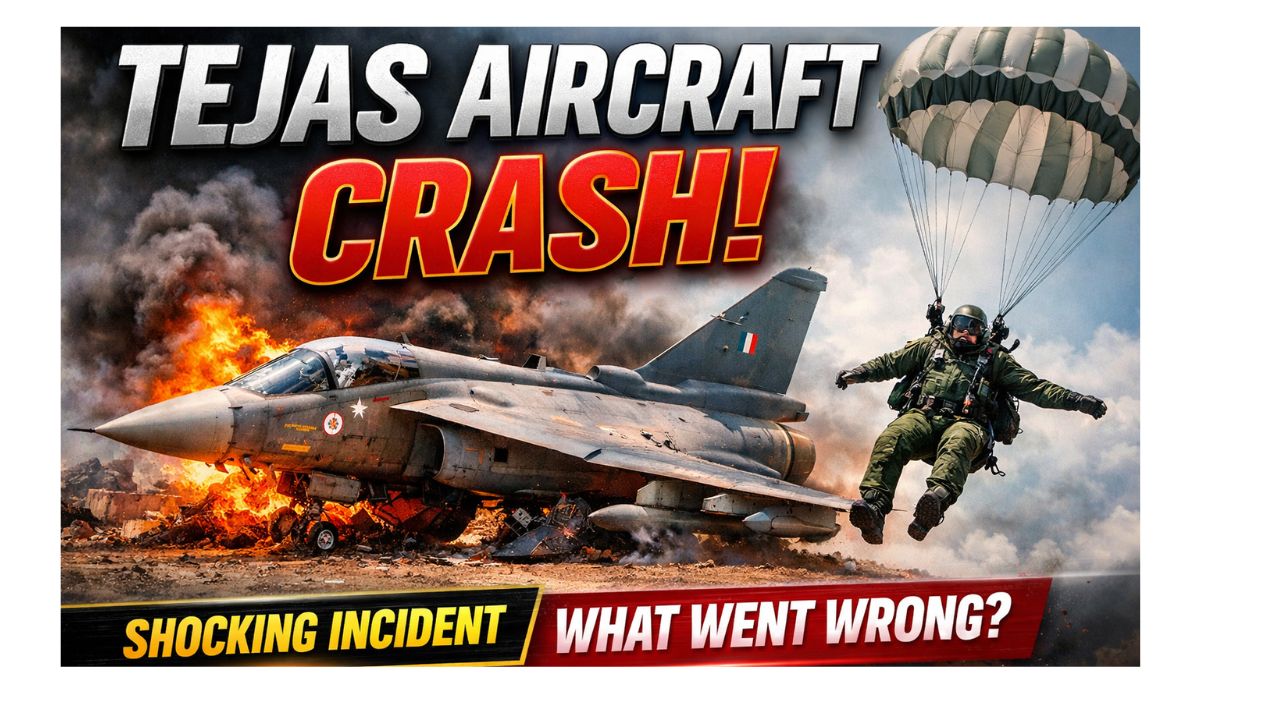
Tejas Aircraft Crash
Tejas Aircraft Crash: What We Know So Far About the Shocking Incident
The recent Tejas aircraft crash has sent shockwaves across the nation, (Tejas Aircraft Crash) raising serious questions about safety, technical reliability, and pilot well-being. India’s indigenous fighter jet program, built with pride and precision, has been a symbol of technological advancement and defense self-reliance. However, this unexpected incident has once again put the spotlight on operational safety and investigation protocols.
In this blog, we break down everything you need to know about the Tejas aircraft crash, possible causes, official statements, and what this means for India’s defense sector.
About the Tejas Aircraft
The HAL Tejas is India’s indigenously developed Light Combat Aircraft (LCA), designed and manufactured by Hindustan Aeronautics Limited (HAL). Developed under the supervision of the Aeronautical Development Agency (ADA), the Tejas is a single-engine, multirole fighter (Tejas Aircraft Crash) aircraft used by the Indian Air Force (IAF).
The aircraft has been praised for its advanced avionics, lightweight composite structure, and powerful engine capabilities. Over the years, Tejas has been seen as a milestone in India’s “Make in India” defense initiative.
Tejas Aircraft Crash: What Happened?
According to initial reports, the Tejas aircraft crash occurred during a routine training sortie. The pilot reportedly faced technical issues mid-air, leading to the unfortunate accident. Emergency protocols were activated immediately, and rescue teams were dispatched to the crash site.
Fortunately, preliminary reports suggest that (Tejas Aircraft Crash) the pilot managed to eject safely before impact, avoiding casualties on the ground. However, official confirmation regarding injuries or damage is awaited from defense authorities.
The Indian Air Force has ordered a detailed inquiry to determine the exact cause of the crash. A Court of Inquiry is standard procedure in such incidents to analyze technical data, pilot communication, and flight logs.
Possible Causes Behind the Tejas Aircraft Crash
While investigations are still ongoing, experts have suggested several possible causes:
Technical Malfunction – Engine failure or system malfunction could have triggered the incident.
Bird Strike – Bird hits are common risks in fighter aircraft operations.
Human Error – Though rare, pilot miscalculation cannot be ruled out.
Weather Conditions – Sudden adverse weather might have played a role.
It is important to note that these are speculative possibilities, and only the official investigation report will reveal the confirmed cause.
Impact on India’s Defense Program
The Tejas aircraft crash comes at a (Tejas Aircraft Crash) time when India is aggressively expanding its indigenous defense manufacturing capabilities. The Tejas program has received significant investment, and several squadrons are being inducted into the Indian Air Force.
Any crash involving a frontline fighter jet naturally raises concerns about reliability and safety. However, defense experts emphasize that even advanced nations experience occasional aircraft mishaps. Such incidents are often part of the rigorous testing and operational lifecycle of military aviation.
If the issue is technical, HAL and ADA are expected to implement corrective measures swiftly to ensure operational readiness.
Official Response and Investigation
The Indian Air Force has assured the public that a transparent and thorough investigation will be conducted. Senior defense officials have stated that flight safety remains their top priority.
HAL is also likely to cooperate closely with the IAF to examine black box data, maintenance records, and component performance history.
Historically, the Tejas aircraft has maintained a relatively safe operational record compared to older fighter jets. Therefore, this crash, while serious, may not significantly affect the long-term future of the program.
What Happens Next?
Following a crash, several steps are usually taken:
Grounding of similar aircraft temporarily
Technical inspection of the entire fleet
Review of maintenance protocols
Pilot safety review and retraining
If no major systemic flaw is discovered, operations typically resume after safety clearance.
Public and Expert Reactions
The Tejas aircraft crash has sparked mixed reactions on social media. (Tejas Aircraft Crash) While some critics questioned the reliability of indigenous defense equipment, many defense analysts urged caution, reminding the public that aircraft accidents happen worldwide, even with the most advanced jets.
Supporters of the Tejas program argue that such incidents should not undermine years of innovation and progress. Instead, they see it as an opportunity to further strengthen India’s defense systems.
Conclusion
The Tejas aircraft crash is undoubtedly a serious and concerning event. However, it is essential to wait for the official findings before drawing conclusions. India’s defense ecosystem has grown significantly in recent years, and the Tejas fighter jet remains a crucial component of the Indian Air Force’s modernization strategy.
As investigations continue, transparency and swift corrective action will be key in maintaining public trust and operational confidence.