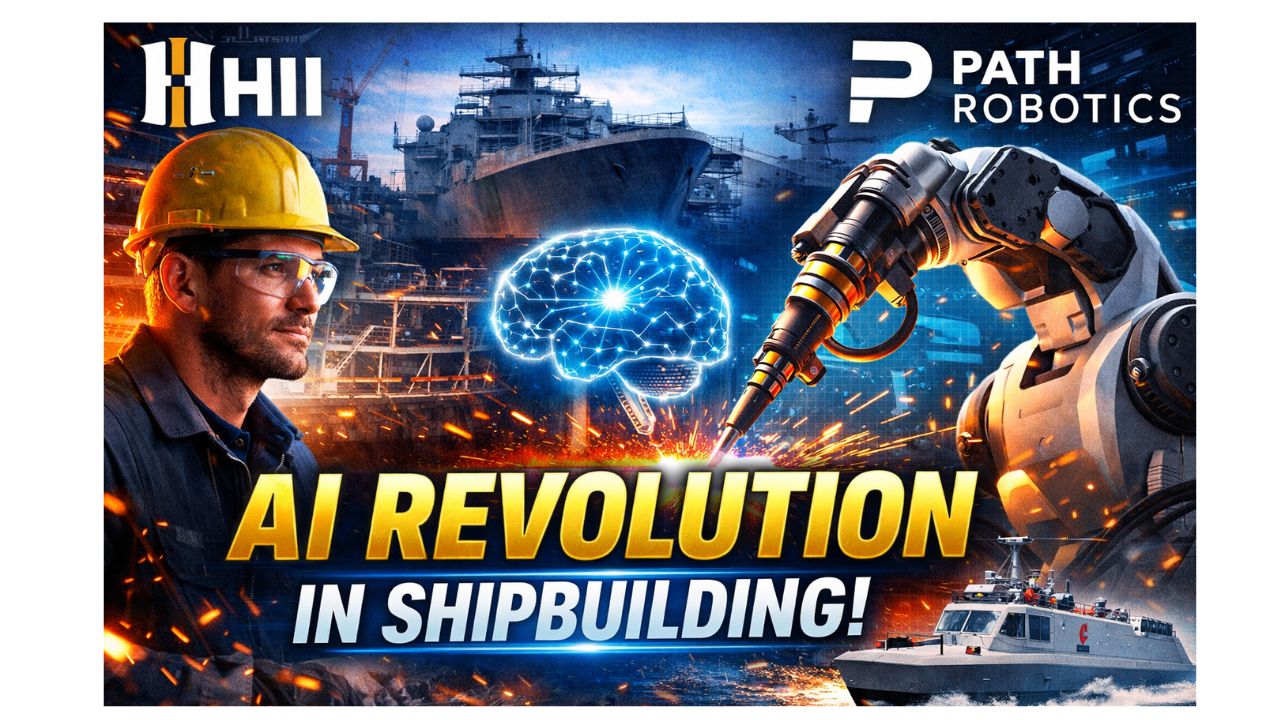
HII Path Robotics physical AI
Revolutionary Leap: HII Teams with Path Robotics to Integrate Physical AI into Manned and Unmanned Shipbuilding
The global shipbuilding industry is entering a (HII Path Robotics physical AI) new era of automation and intelligence as Huntington Ingalls Industries partners with Path Robotics to integrate advanced physical artificial intelligence into both manned and unmanned shipbuilding. This revolutionary collaboration signals a major shift toward smarter, faster, and more precise manufacturing processes in one of the world’s most complex industrial sectors.
As naval and commercial fleets demand higher performance and faster delivery timelines, the integration of physical AI offers a powerful solution. By combining robotics, machine learning, and real-time sensing, HII and Path Robotics aim to modernize shipyard operations and set new standards for efficiency and quality.
Transforming Traditional Shipbuilding with Physical AI
Shipbuilding has long been known for its labor-intensive processes and intricate engineering challenges. Welding, assembly, and inspection require extreme precision, often performed in demanding environments. The introduction of physical AI brings intelligent robotic systems capable of learning, adapting, and executing complex tasks with minimal human intervention.
Through this partnership, (HII Path Robotics physical AI) AI-powered robots will assist in critical manufacturing stages such as precision welding, component assembly, and structural fabrication. These systems are designed to continuously learn from their surroundings, improving accuracy and productivity over time. This not only reduces human error but also enhances workplace safety by minimizing exposure to hazardous conditions.
Enhancing Manned and Unmanned Vessel Production
The collaboration has significant implications for both manned naval ships and next-generation unmanned vessels. As autonomous and remotely operated ships become increasingly important for defense and commercial operations, efficient production methods are essential.
Physical AI enables faster prototyping and scalable (HII Path Robotics physical AI) manufacturing, allowing shipbuilders to adapt designs quickly and meet changing mission requirements. For unmanned systems in particular, advanced robotics streamline production while ensuring consistent quality standards.
By integrating intelligent automation into its shipbuilding ecosystem, HII is positioning itself to support future naval innovation, including autonomous surface and underwater vehicles.
Boosting Efficiency and Workforce Collaboration
(HII Path Robotics physical AI) One of the most impactful aspects of this partnership is how it reshapes the relationship between human workers and machines. Rather than replacing skilled labor, physical AI is designed to augment human capabilities. Workers can focus on high-value tasks such as design, quality assurance, and system integration, while robots handle repetitive and precision-intensive operations.
This collaborative model improves overall productivity and helps address workforce challenges facing the manufacturing sector. With growing demand for advanced ships and a shortage of highly specialized labor, AI-driven automation provides a practical path forward.
Additionally, smart robotics generate valuable data insights that can be used to optimize workflows, predict maintenance needs, and enhance operational planning.
Driving Innovation in Defense and Maritime Industries
The HII–Path Robotics alliance reflects a broader trend toward digital transformation in heavy industry. Governments and private organizations worldwide are investing in AI-enabled manufacturing to strengthen supply chains and technological leadership.
For the defense sector, integrating physical AI into shipbuilding supports faster deployment of advanced naval platforms. Enhanced manufacturing precision leads to improved vessel performance, durability, and mission readiness. (HII Path Robotics physical AI)
In the commercial maritime industry, similar technologies could reduce production costs and accelerate innovation in cargo ships, offshore platforms, and research vessels.
Future Outlook: Smart Shipyards and Autonomous Manufacturing (HII Path Robotics physical AI)
Looking ahead, the partnership sets the stage for fully connected smart shipyards where AI systems coordinate design, production, and quality control in real time. As robotics technology continues to evolve, shipbuilding facilities may become increasingly autonomous, capable of adapting to new projects with minimal downtime.
The integration of physical AI is more than a technological upgradit represents a strategic investment in the future of manufacturing. By embracing intelligent automation today, HII and Path Robotics are helping shape the next generation of shipbuilding.
Conclusion
(HII Path Robotics physical AI) The collaboration between HII and Path Robotics marks a revolutionary milestone in maritime manufacturing. By embedding physical AI into manned and unmanned shipbuilding, the partnership promises greater efficiency, improved safety, and accelerated innovation.